
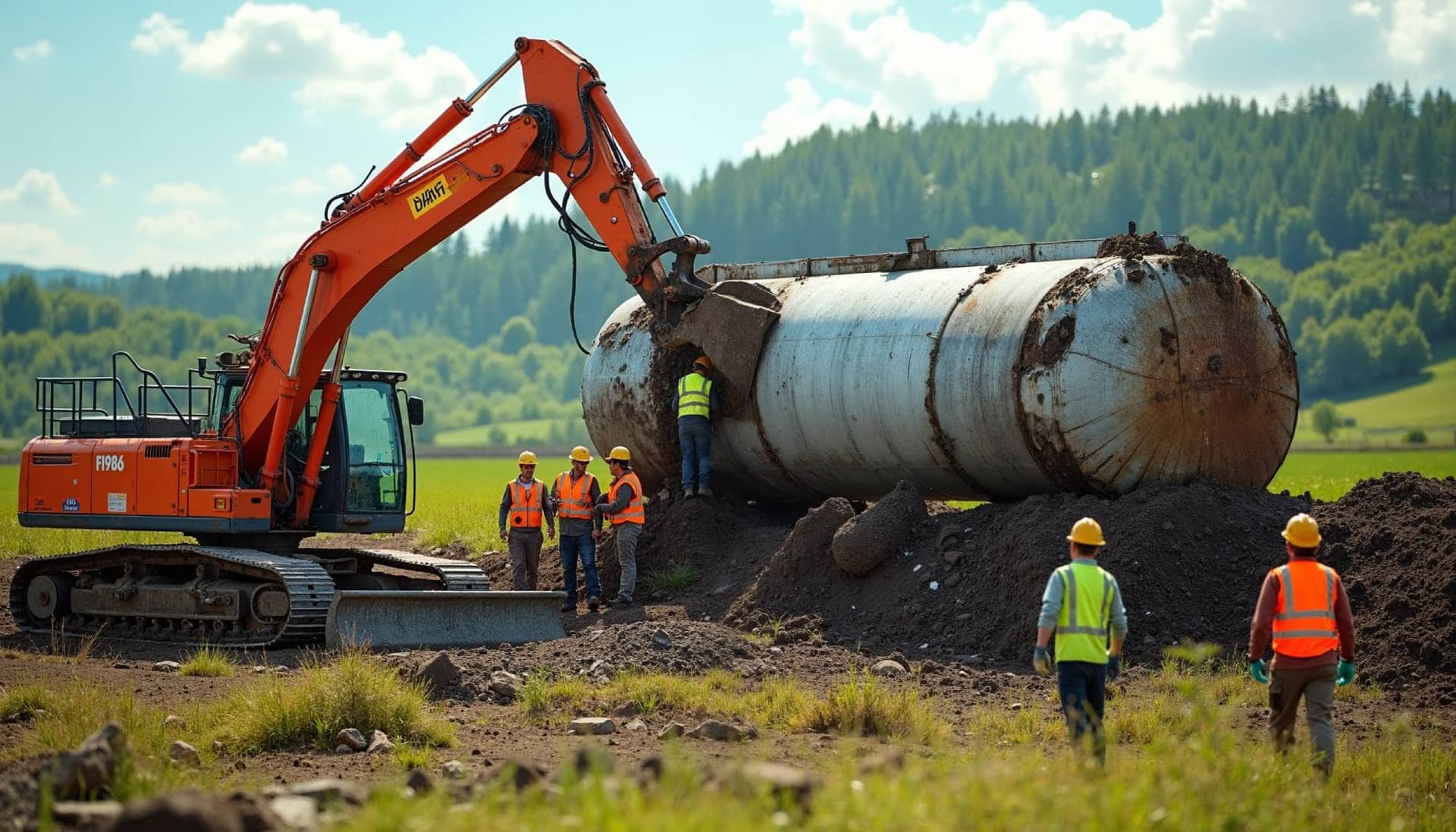
Storage Tank Removal
Whether underground or aboveground, a heating oil or petroleum product tank can be removed without trouble, whatever its size. We coordinate the work of specialized contractors and characterize the soil when the tank is removed or replaced, to confirm that it is not contaminated.
Free quote
Safe, compliant tank removal
A single point of contact
We coordinate the entire process, from the initial assessment to the final soil characterization, with specialized contractors.
Safe operations
A tank often contains flammable or contaminating products: strict protocols protect workers, the public and the environment.
Soil checked after removal
Samples are collected under the tank and analyzed: they confirm the absence of contamination or help plan the next steps.
Why choose us
A complete approach, from removal to validation
A proven method, for a clean and compliant site.
Preliminary assessment
Type of tank (underground or aboveground), capacity, past contents and condition, to plan the intervention properly.
Safe removal
Draining, cleaning, neutralization when needed, then removal by our partner contractors, following strict safety standards.
Soil characterization
Sampling under the former tank location and laboratory analysis.
Compliance report
A detailed report of the work and analyses. If the soil is compliant, we help you obtain the required certificates.
Our 3-step approach to a safe site
Step 1: Planning and authorizations
Intervention plan, choice of specialized contractors and authorizations from the competent authorities.
Step 2: Removal and sampling
During the removal, our team collects soil samples under the tank.
Step 3: Analysis and report
If the soil is compliant, a report validates the removal. If not, we recommend the necessary decontamination work.
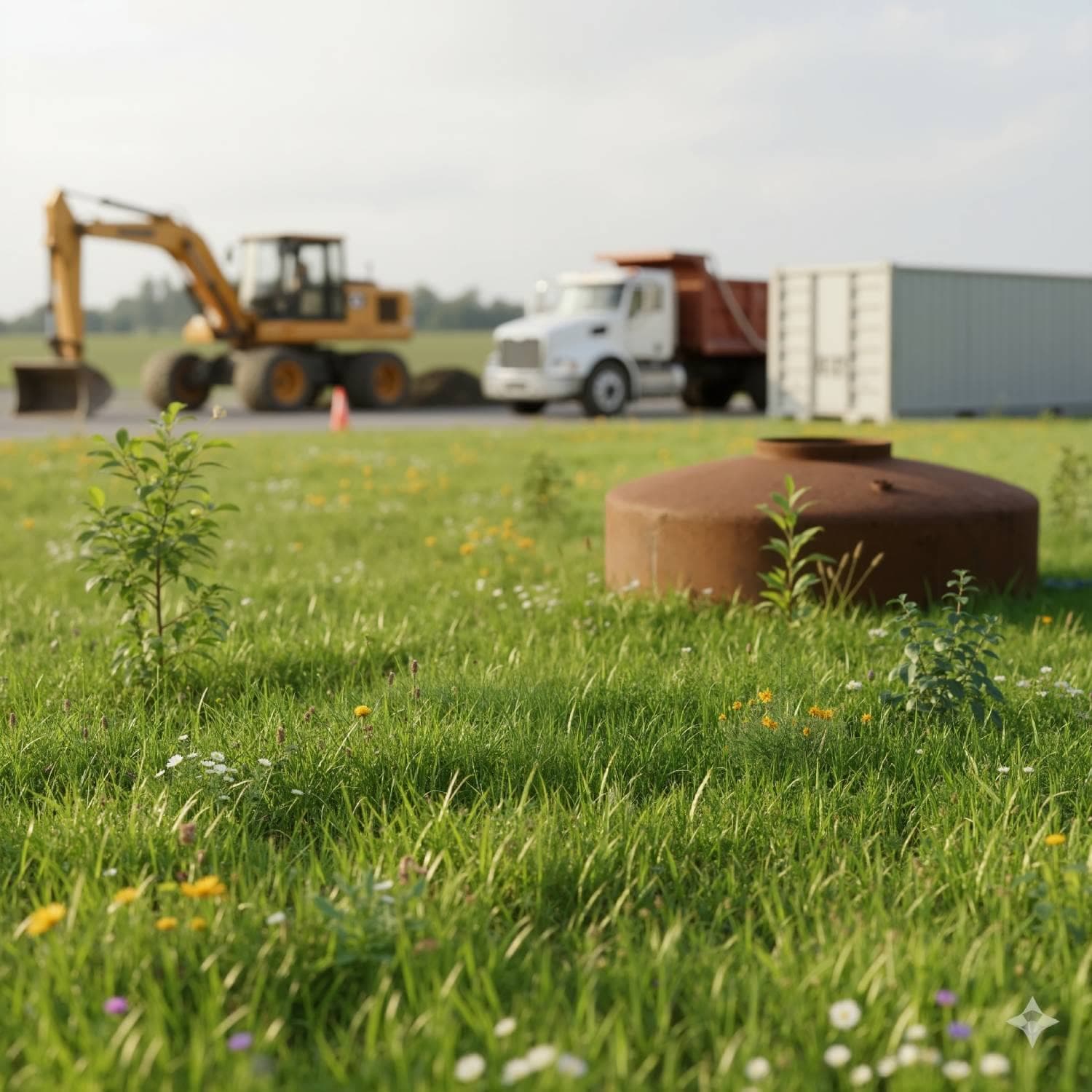

Contact us
Your project, our complete expertise
Ready to start or need clarification? Talk to our specialists and receive a quote adapted to your situation.
Request a quoteFAQ
Frequently asked questions: Storage Tank Removal
When should a tank be removed?
Often during a real estate transaction, a change in land use or a heating system replacement, or when the tank is at the end of its life or shows signs of leaks or corrosion.
Should the soil under an aboveground tank also be tested?
Yes, it is strongly recommended. A leak can go unnoticed for years and contaminate the soil, which engages the owner's liability.
What if the soil is contaminated after the removal?
We support you through the decontamination (Phase 3), with a remediation plan that meets MELCCFP requirements.
Have other questions? Contact us.