Phase 1, Phase 2, Phase 3: which environmental assessment do you need?
Published on by Emphase Environnement

The three phases follow one another, and each answers a different question. Phase 1 tells you whether there is a risk of contamination, based on the site's history and a site visit, with no drilling. Phase 2 checks that risk with soil or groundwater samples analyzed in a laboratory. Phase 3 restores the site when contamination is confirmed. In most transactions you start with a Phase 1, and go further only if it recommends it.
The three phases at a glance
| Phase 1 | Phase 2 | Phase 3 | |
|---|---|---|---|
| The question | Is there a risk of contamination? | Is the land contaminated, and how far does it extend? | How do we restore it? |
| What is done | Historical research, site visit, interviews | Boreholes, soil and water samples, laboratory analysis | Remediation plan, work, confirmation sampling |
| Field work | No drilling | Targeted boreholes | Excavation or treatment of soil |
| What you get | A report that concludes: risk or no risk | Measured concentrations, compared with the permitted limits | A compliant site and the reports that prove it |
| When | Purchase, sale, financing, refinancing | When the Phase 1 identifies a risk | When the Phase 2 confirms an exceedance |
Phase 1: is there a risk of contamination?
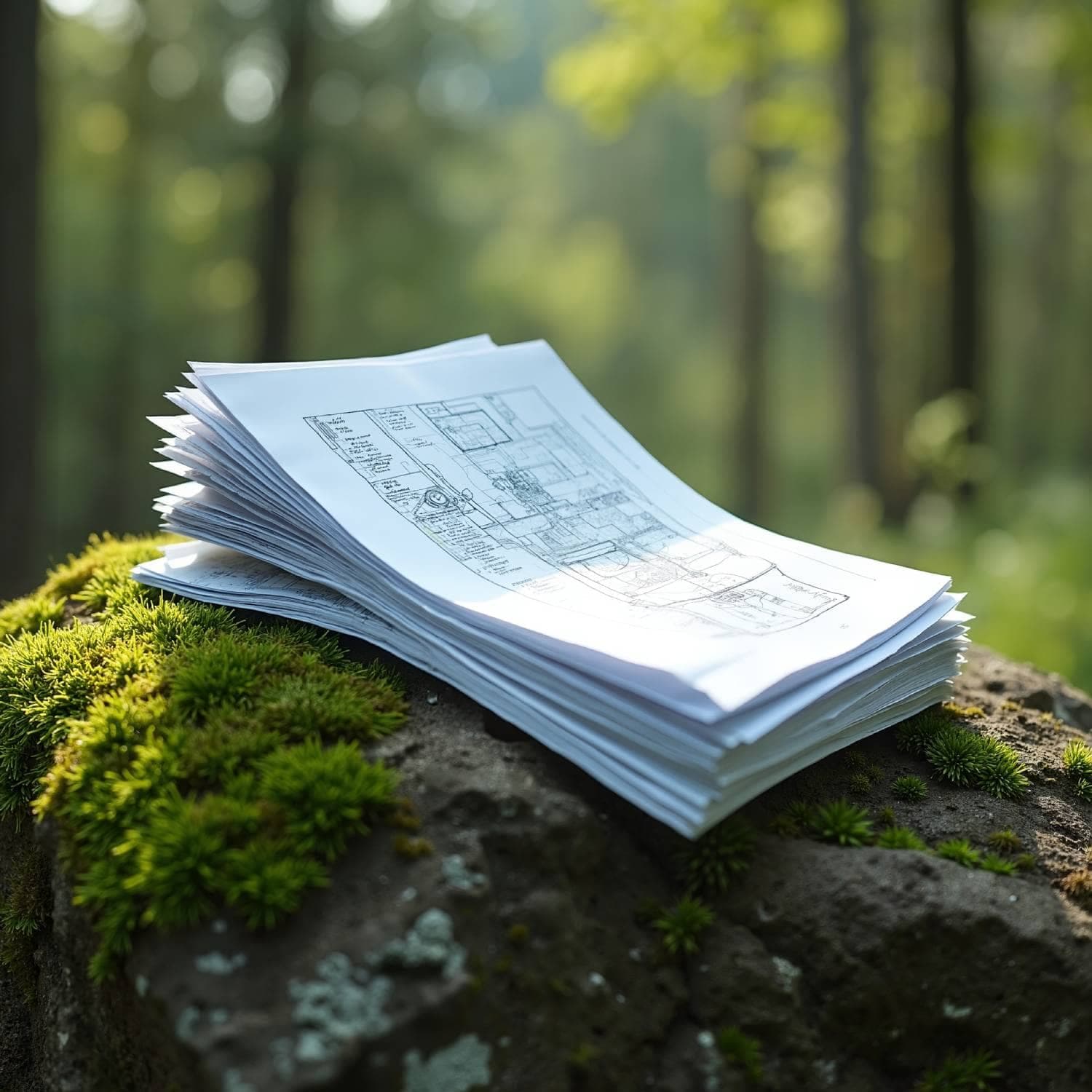
The Phase 1, or Phase I environmental site assessment (ESA), is an investigation. Nobody digs. The professional pieces together what happened on the site and around it:
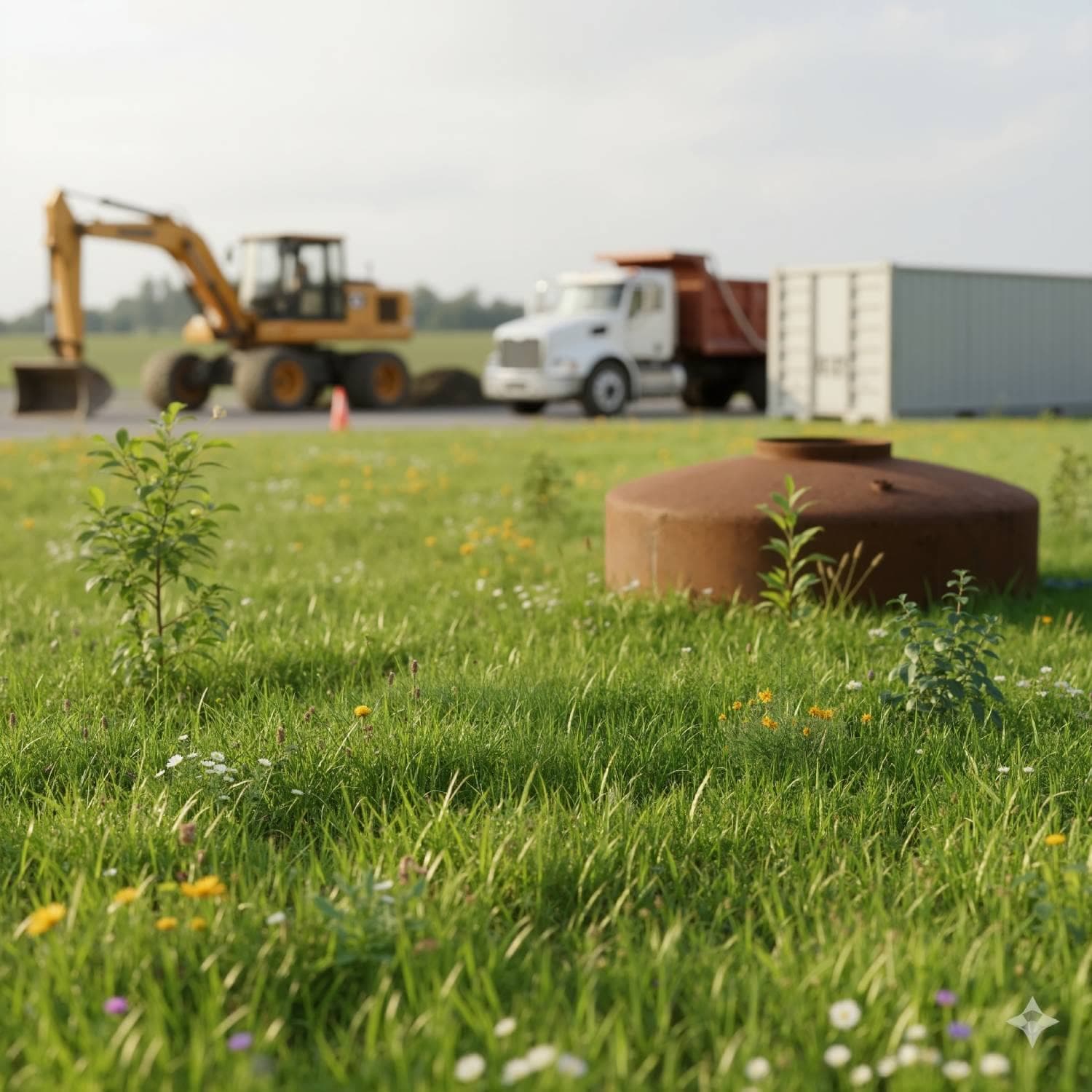
- history: past uses of the site and neighbouring properties (gas station, garage, machine shop, dry cleaner, fill of unknown origin, heating oil tank);
- records: historical aerial photos, municipal records, the Environment Ministry's registries, existing reports;
- site visit: stains, odours, tank vent or fill pipes, drums, suspicious materials;
- interviews with the owner, occupants and, if useful, neighbours.
The report ends with a clear conclusion. Either no concern is identified and the file stops there, or the professional names areas of potential concern and recommends a Phase 2 to check them.
Emphase carries out its Phase 1 environmental site assessments under the CSA Z768-01 standard, the one lenders ask for. Turnaround is generally 2 to 4 weeks, depending on how complex the site is and how easy the records are to obtain.
This is the phase you need if you are buying, selling or refinancing a commercial, industrial or multi-unit building, or land that has been used for anything other than housing. It is also almost always a lender's first request: see what your lender requires on the environmental side.
Phase 2: is the land actually contaminated?
The Phase 2, or environmental site characterization, looks for proof. According to the Quebec Environment Ministry's site characterization guide (in French), it uses boreholes, sampling and chemical analysis to verify whether suspected contamination is present.
In practice:
- a sampling plan that targets the areas of concern named in the Phase 1, not the whole site at random;
- boreholes or test pits, soil samples and, if needed, monitoring wells for groundwater;
- analysis in an accredited laboratory for the contaminants the site history points to: petroleum hydrocarbons, metals, volatile organic compounds, PCBs;
- a report that compares the results with the applicable limit values and delineates the affected area.
The limit values come from the Land Protection and Rehabilitation Regulation. They depend on land use: Schedule I applies by default, so to residential land, and the less stringent Schedule II applies to land zoned for industrial, commercial or institutional uses, with exceptions (residential buildings, schools, daycares, hospitals). The same soil can therefore be compliant for a warehouse and non-compliant for housing. Keep this in mind if you are planning a change of use.
This is the phase you need if your Phase 1 recommends it, your lender asks for it, or you have direct evidence: a tank that leaked, stained soil, a hydrocarbon odour during excavation. Our article on soil testing before buying land explains how to plan for it in an offer to purchase, and our Phase 2 environmental site characterization page describes our method.
Phase 3: restoring the site
When the Phase 2 confirms concentrations above the limits allowed for the land's use, the problem still has to be dealt with. Phase 3 includes:
- the remediation plan: method, budget estimate, schedule;
- the work: most often excavating the contaminated soil and trucking it to an authorized facility, sometimes treating it on site;
- confirmation sampling of the walls and floor of the excavation, to show that the limit values are met;
- the final report, which becomes the proof of compliance for a buyer, a lender or the Ministry.
It takes from a few weeks to several months, depending on how far the contamination extends and the method chosen. The steps and methods are covered in our guide to soil decontamination.
"Phase 3" does not mean the same thing everywhere
A point of vocabulary avoids many misunderstandings when you compare quotes.
In the Ministry's site characterization guide, the three phases are three levels of a single characterization study. Phase I documents the history. Phase II checks the suspected contamination. The "supplementary Phase II (Phase III)" delineates the contamination more precisely and estimates the volume of affected soil.
In everyday real estate language, and on our website, Phase 3 means the decontamination itself. At Emphase, fully delineating the contamination is part of the characterization work, before the remediation plan.
When a firm offers you a "Phase 3", simply ask what it includes: supplementary characterization, decontamination work, or both.
Which phase fits your situation?
- You are buying a commercial or multi-unit building with a loan. Phase 1. Order it as soon as the offer is accepted: it often sets the financing schedule.
- You are buying land that was a garage, gas station or workshop. Phase 1 first, and leave time in your offer for a Phase 2: it is likely.
- You have a Phase 1 that identifies areas of concern. Phase 2, targeted on those areas.
- Your Phase 1 is more than a year old. The Ministry's guide states that a Phase I can be considered current for a maximum of one year. After that, an update may be required, and your lender may ask for one.
- You are ending an industrial or commercial activity, or changing the use of land where one took place. The law may require a characterization study: see the next section.
- A Phase 2 has confirmed contamination. Phase 3, starting from the results you already have.
- You are shopping for a residential property and just want to know if anything worrying is nearby. A full Phase 1 may be premature. Prephase produces a $45 preliminary report in minutes from public registries, within 300 m of the address. The report is for information only: it has no legal value and does not replace a Phase 1. Its cost is credited if you then order a Phase 1 from Emphase.
When the law requires a study
Most Phase 1s are requested by a lender or a careful buyer, not by law. But Quebec's Environment Quality Act (EQA) requires a characterization study in some cases, for land where an industrial or commercial activity listed in Schedule III of the Land Protection and Rehabilitation Regulation took place. The list includes fuel stations, machine shops, foundries, metal surface treatment and wholesalers of petroleum products or chemicals.
- Ceasing an activity (section 31.51). Anyone who permanently ceases a listed activity must send the Minister and the landowner a characterization study within 12 months. If it shows that the limit values are exceeded, a remediation plan must follow within three months.
- Change of use (sections 31.53 and 31.54). Before changing the use of land where such an activity took place, a characterization study must be submitted. If limits are exceeded, the change of use requires the Minister's approval of a remediation plan.
- Notices in the land register (sections 31.58 and 31.59). When a study carried out under the Act shows an exceedance, a contamination notice must be registered in the land register. After the work, a decontamination notice can be registered in turn.
These studies must be signed by a professional and follow the site characterization guide. If you are in one of these situations, say so on the first call: the scope of work is not the same as for a simple transaction.
Can you skip a step?
Rarely in the right direction. Drilling without a Phase 1 means searching without knowing where or what for: you risk sampling in the wrong place, or not asking the laboratory for the right contaminant. The Ministry's guide describes Phase I as an essential step in any characterization, because it sets the sampling strategy.
There are two common exceptions. When a recent Phase 1 already exists, even one done by another firm, you can start from it. And when the source is known and localized, for example a leak under a tank that has just been removed, a targeted characterization is often enough.
Conversely, a Phase 1 with no concerns ends the process. You do not have to pay for a Phase 2 "just to be sure".
In short
Start with a Phase 1, unless you already have a recent report or a known contamination. Each phase decides the next one, and you can stop as soon as a report concludes there is no concern.
To find out which phase applies to your site and get a price, request a free quote or call us at (514) 688-9747 in Montreal or (418) 520-9747 in Quebec City. If your transaction has a deadline, mention it: it is the first thing we plan around.